
Dining Table Shapes Explained: Rectangular, Round, Oval and Square
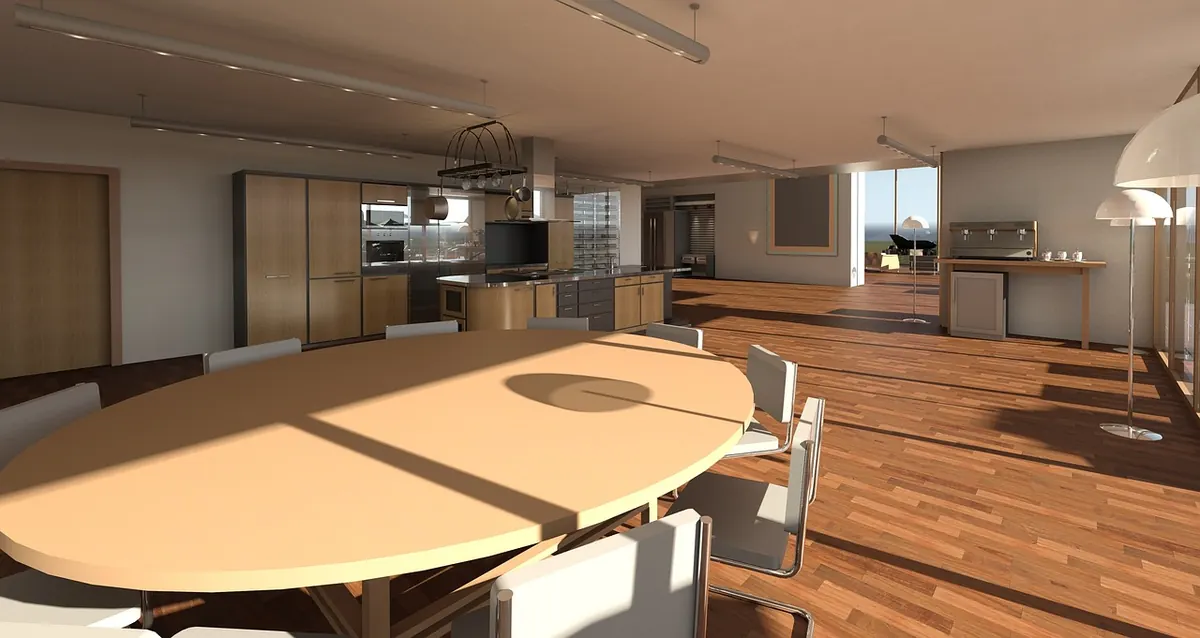
A dining table is one of the few pieces of furniture you will use almost every day, and yet most of us choose the shape almost by accident — whatever looked right in the showroom photograph. Capacity gets all the attention, but shape is what decides whether guests can hear each other, whether you can squeeze past a chair to reach the kettle, and whether the room feels generous or faintly cramped. Nail the shape and the rest of the decision gets much easier.
Shape decides three things: seats, conversation and flow
Before comparing one shape against another, it helps to know what you are actually measuring.
- Seating numbers. How many people fit without knees colliding. Allow roughly 60cm of table edge per person as a minimum, and 70–75cm if you want everyone eating comfortably with elbows out.
- Conversation. Distance and sight lines. Round and oval tables keep everyone within easy talking reach; long rectangles tend to split into two or three separate conversations.
- Flow. The space around the table. You need about 90cm behind a chair to pull it out and walk past, so a big table in a small room always feels worse than a slightly smaller one with breathing room.
Rectangular tables
The default choice, and for good reason. Rectangles suit the proportions of most British dining rooms and kitchen diners, sit neatly against a wall when not in use, and generally give you the most seating per square metre of floor. A 160cm × 90cm top seats six with reasonable elbow room; 180cm seats six generously or eight at a push; step up to 210–240cm and eight to ten becomes realistic, though the table will start to dominate the room.
Legs matter as much as the top. Four legs at the corners look traditional but eat into legroom, and the end seats are often unusable because there is nowhere to put your feet. If you want to use the ends properly, look for a pedestal base, trestle legs set well inboard, or a central frame.
The trade-off is sociability. At either end of a long rectangle you can be over two metres apart — fine for a Sunday lunch, less good for a dinner party where you want one conversation rather than three.
Round tables
Round tables solve the conversation problem completely. Everyone sits roughly the same distance from the centre, there is no head of the table and no one stranded at a corner. They also work surprisingly well in tight spaces: no corners to walk into, easier to slide past, and a round table in a square-ish room often looks more at home than a rectangle shoved against one wall.
As a guide, a 100–110cm diameter seats four, 120cm seats four very comfortably, 150cm seats six, and 180cm seats eight — though at that size reaching the middle becomes a stretch, so a sideboard or a small serving trolley nearby earns its keep. One caution: a heavy top on a single slim central column can feel tippy. Choose a base with real weight, or a pedestal with a wide foot.
Square tables
Underrated, and often the smartest answer in a small flat or a bay window. A 100cm square seats four; a 120cm square seats four with room to spare. Its perimeter will technically take six or even eight, but in practice four is the comfortable number.
The drawback is that nobody wants a corner seat, and the geometry is unforgiving if two of you want to spread out paperwork or a laptop. Square tables do, however, look wonderfully ordered, work beautifully for board games and cards, and can be pushed into a corner as a two-person table for everyday use, then pulled out when guests arrive.
Oval tables
An oval is essentially a rectangle with its awkwardness removed. You get the long sides that seat six to eight, but the rounded ends are genuinely usable — no corner digging into anyone's ribs. Visually the softer line suits narrow rooms particularly well, where a rectangle's sharp corners make a space feel tighter than it is, and an oval almost always extends gracefully if you buy an extending version.
An oval needs the right base. Four corner legs look wrong and waste the end seats; a pedestal or inboard trestle legs let people sit at the curve properly. Pair it with chairs that have a slightly curved back, or a bench along one side, so the outline reads as one shape rather than a collection of angles.
Matching shape to your room
- Mark it out. Tape the table footprint on the floor, then tape the chairs pulled out. It takes ten minutes and prevents the most common mistake.
- Check the walkways. Leave 90–100cm behind chairs on any route people use to get past, including the path to the back door.
- Count your regulars, not your record. Design for a normal Tuesday, then cover Christmas with an extending top or a folding table.
- Mind the pendant light. A ceiling light usually wants to sit centred over the table, which can pull it away from the wall you had in mind.
- Think about who moves. If someone is up and down during the meal, an end seat near the kitchen door is easier on a rectangle; on a round table everyone is equally boxed in.
- Check the route in. Measure the doorway, the hall turn and the stairwell before delivery day.
A quick way to decide
If conversation and a modest footprint matter most, go round. If you regularly seat six to eight and the room is longer than it is wide, a rectangle or an oval will serve you better — choose the oval if you want softer lines and usable ends. If you are usually four and space is tight, a square is quietly excellent.
Whichever you pick, buy the smallest table that seats your regular number comfortably, and sit at it before you commit. Check that the underside clears your thighs, that the height sits comfortably with your chairs, and that the end seats are somewhere you would actually want to spend an evening.
Photo: ehrendreich / Pixabay