
Beginner's Guide to Furnishing Your First Living Room
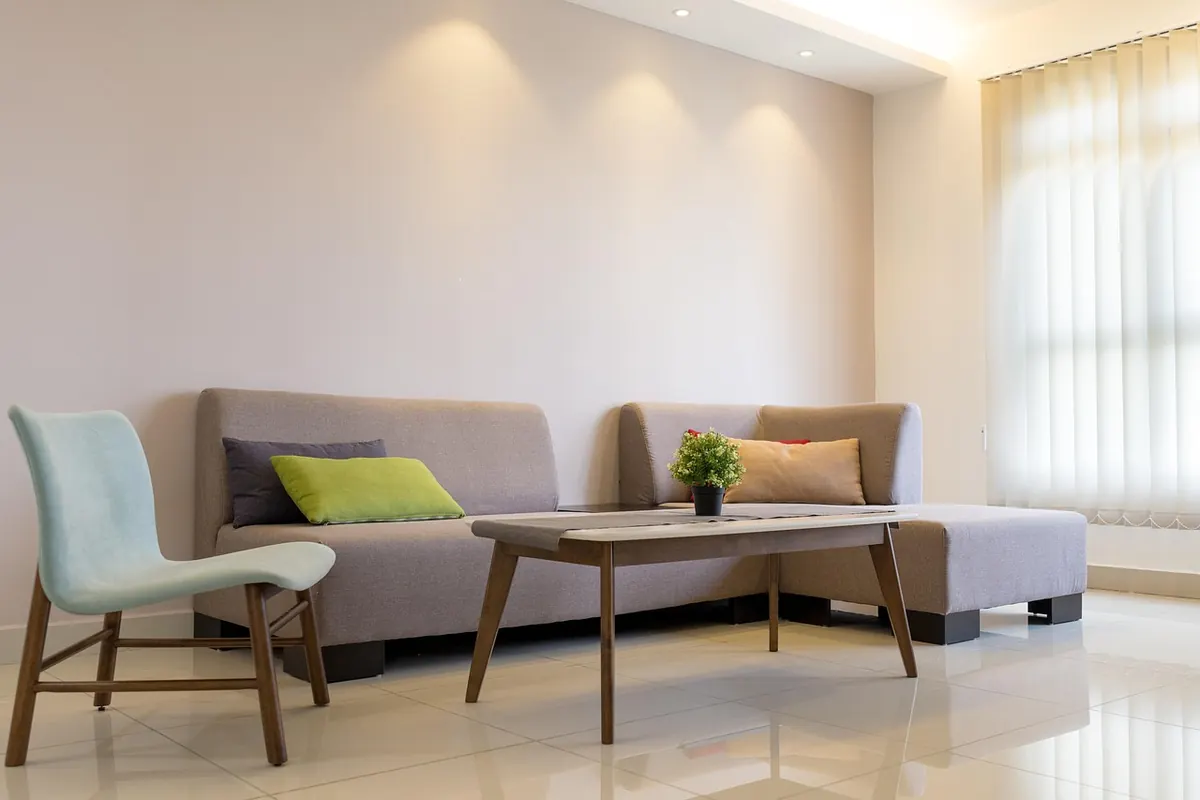
Your first living room rarely arrives finished. You move in with a sofa, a lamp and a suitcase standing in for a coffee table, then spend six months wondering why the place still feels like a waiting room. The gap between somewhere to sit and somewhere you actually want to sit is smaller than it looks — it mostly comes down to order, proportion and light.
Start with the room, not the shopping
Before you buy anything, spend an evening in the empty space. Measure the walls, note where the doors, windows, radiators and sockets sit, and sketch a rough plan on paper. Mark where daylight falls in the morning and again in the late afternoon.
The point isn't precision. It's avoiding the classic first-home mistake: a three-seater that blocks the only radiator, or a rug that floats in the middle of the floor like a bath mat. If you can, tape the outline of a sofa onto the floor with masking tape and walk around it for a couple of days. It sounds fussy. It saves an argument on delivery day.
Then decide what the room is for. A room built around a television is a different room from one built around conversation. You can have both, but you have to choose which one leads.
The order to buy pieces in
Buy in the order you'd notice the absence. Roughly:
- Seating. The sofa or armchairs that everything else arranges itself around.
- Storage. A sideboard, a shelving unit or a media cabinet — somewhere for the things that would otherwise live on the floor.
- Lighting. At least two lamps beyond the ceiling fitting. Buy these before the coffee table.
- A rug. Big enough that the front legs of the sofa sit on it, not in front of it.
- Tables. A coffee table and a side table per seat, or as close as the space allows.
- Window treatments. Curtains or a blind, fitted properly rather than draped over a rail.
- The finishing layer. Art, cushions, a throw, a plant. None of it needs to be expensive.
Working in this order means that if the money runs out — and it usually does — you stop at a room that works, rather than a room with beautiful cushions and nowhere to sit.
Where the money should go
A simple rule: spend on the things you touch every day and the things that carry weight. Save on the things that are mostly decoration.
- Worth spending on: the sofa, a decent floor lamp or two, a rug that will survive a vacuum, and anything with moving parts such as a recliner or a sofa bed.
- Fine to save on: coffee tables, side tables, mirrors, shelves, vases and picture frames. These get replaced as your taste settles, and it will settle differently from how you expect.
- Worth buying second-hand: solid wood tables, chests and shelving. Check joints for wobble and drawers for smooth running, and look carefully at anything upholstered before it comes home. Charity shops, local auction rooms and online marketplaces are good hunting grounds — but measure before you commit, because a bargain that doesn't fit is just a problem with a receipt.
If money is tight, buy the seating first and live with bare walls for a few months. Nobody regrets waiting; plenty of people regret the impulse buy they can't return. If you're considering a credit agreement or finance to spread the cost, read the terms properly — and get independent advice if anything about them is unclear.
Why a new room still looks empty
A room that feels unfurnished is rarely short of furniture. It's usually short of height and light. Everything you own sits below waist level, so the eye finds nothing to rest on.
Three fixes do most of the work. First, bring light down to eye level: a floor lamp beside the sofa, a table lamp on a sideboard. Two or three pools of warm light will do more for a room than any single overhead fitting. Second, use the walls. One large picture beats five small ones scattered at random, and art hung slightly lower than you first think looks better. Third, add something tall and living — a plant, a tall bookcase, or curtains hung close to the ceiling rather than just above the window frame.
Scale matters just as much. In a large room, a small two-seater marooned in the middle will make the space feel emptier than it did when it was bare. Pull the furniture away from the walls, group it, and let the rug mark out the zone.
Small adjustments that make a big difference
You don't need to do all of these at once. Pick the two that apply to your room and start there.
- Move the sofa off the wall by a few inches. It looks deliberate rather than shoved into place.
- Mix textures rather than matching everything: a wool rug, a cotton throw, a wooden table, a ceramic lamp base.
- Use odd numbers of cushions — three or five — and vary the sizes so they don't line up like soldiers.
- Leave one corner empty. A room with no breathing space feels cramped, not complete.
- Put a lamp on a timer or a smart plug so you come home to light rather than a dark hallway.
Give it six months
The most useful thing you can do is resist finishing too quickly. Keep a note on your phone of what's missing — a lamp for that dark corner, a bigger rug, a shelf for the records — and add to it as you notice gaps. Buy one thing at a time, live with it for a fortnight, and see whether the room still works.
Almost every first living room is a work in progress, and that's fine. A room assembled slowly, around how you actually live, will feel more like yours than one ordered in a single weekend from a catalogue. Start with the seating, sort the light, and let the rest arrive when it's ready.
Photo: tianya1223 / Pixabay